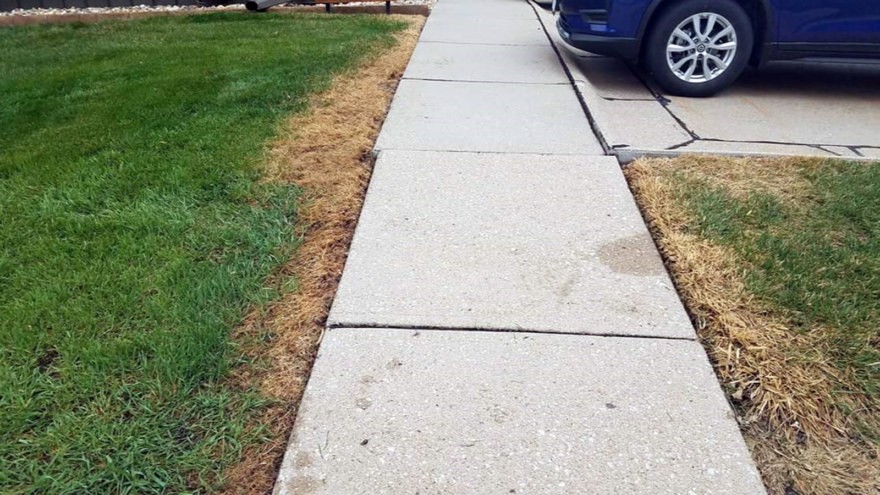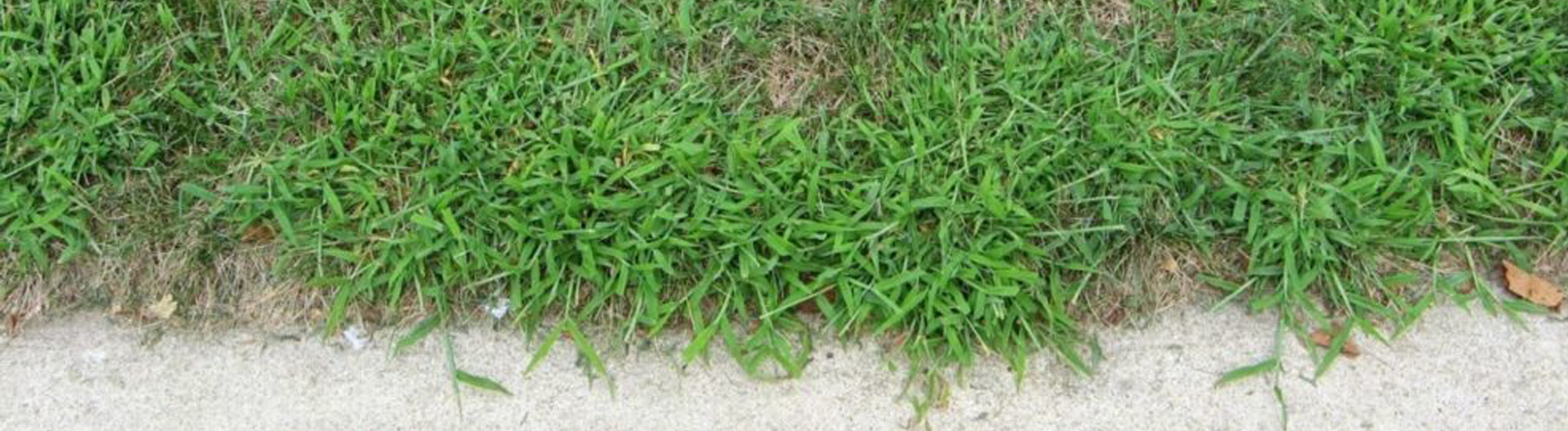
Finally, the snow has started melting. Spring is around the corner, and you can see crocus and daffodils pushing through the last bit of snow. As it starts to melt away from the hard surfaces you eagerly anticipate seeing some green grass after all the snow this winter. But, what’s this? Where is my green grass along the driveway and sidewalk? It’s all brown…You cry out, ‘NOOOOO!!!!’.
But yes, it’s winter salt damage. It can be frustrating in the late winter months when the edges of the turf appear and expose salt damage from the winter.
There are two main reasons this occurs. First, when salt lands on the grass blades it pulls moisture right out of the plant tissue. This causes dehydration and “leaf burn” which is why the grass turns brown and looks scorched. The more serious issue is what happens to the soil as the snow melts and absorbs the salt. As the snow melts, that salt dissolves and soaks into the ground. This can cause three main issues.
-Chemical Damage from the salts causing desiccation to the grass plants and roots.
-Nutrients become locked in the soil like potassium, magnesium, and calcium, making them unavailable to your grass.
-Salt will break down healthy soil structure, causing the soil to become dense and compacted which restricts water, air, and nutrient flow to the roots.
First thing you want to do is to flush out the salt. You will want to soak the effected soil area well to flush out as much of the salt as possible. Soaking the area with an inch of water for three days should help to do this. Remove any dead grass and loosen the soil in the affected areas. Using a pitchfork or probe and adding some gypsum or lime to incorporate it into the soil is a good idea. This initial step is crucial as it helps break up any salt buildup and prepares the soil for new growth. Severely damaged areas may require removal of the top inch of soil. Apply a layer of quality topsoil. Do not use potting soil. When reseeding you want to choose grass varieties that are more resistant to salt damage such as turf type tall fescue. Spread the seed evenly and keep the area consistently moist until germination occurs. Using a light layer of straw or seed blanket to protect the seeds and retain moisture will help in the germination process and help to keep birds from eating the seed. Proper watering techniques will be essential during this period to ensure the seed germinates well and establishes strong roots.
Fixing the damaged areas isn’t difficult but depending on the upcoming spring and summer weather it may require additional repairs in the fall. If we experience a hot and dry season, the young grasses in these areas may not survive through the summer due to radiant heat and not having a well-established root system.
A strong, healthy lawn is naturally more resilient to all kinds of stress, including salt. Following good lawn care practices is essential. Mowing and trimming too short will certainly cause additional issues. Fall aeration and seeding, winter fertilization, and keep mowing until it goes dormant. A vigorous turf will be better prepared to handle winter’s challenges. Even with all this being said, salt damage can still occur but don’t fret. There is always a solution to the problem.